A Bet Worth Placing: Computing and Data Science at UChicago
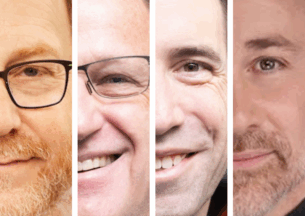
 By Henry Hoffmann, Dan Nicolae, and Michael Franklin
September 2, 2025
In a recent article in Compact, professor Clifford Ando raises important questions about our University’s future and its guiding values. He specifically questions the University’s investment in computer science (CS). As current and former department chairs and founding faculty of the Data Science Institute (DSI), we offer a perspective shaped by the history and aspirations of our programs, grounded in the University of Chicago’s unique commitment to holistic inquiry and broad intellectual engagement. In fact, many of our colleagues joined UChicago precisely because of the institution’s intellectual values. We, together with the University, made a shared bet to grow computing and data science and the returns have been both intellectual in terms of furthering UChicago’s academic values, and tangible in the form of student growth, grants, gifts, and revenue.
Why computing and data enhance UChicago’s intellectual value
Faculty in computer and data science share the University’s commitment to broad, cross-disciplinary inquiry. We believe deeply that a university famous for humanistic inquiry is exactly where our fields should grow. UChicago bet on us; we bet on UChicago. We recruited colleagues who could have settled at established, engineering-centered institutions but who chose UChicago because the life of the mind here isn’t confined to any one discipline. We set out to grow computer science, data science, and AI in dialogue with philosophy, history, literature, law, medicine, the sciences, and the arts. We did so with confidence that our fields would be stronger for it, as would UChicago’s broader mission.
In his article, professor Ando puts it well: “The goal of education is to create people as lifelong learners, seekers, and questioners.” We agree. In a world transformed by computing, data, and now AI, basic fluency in computational thinking and data literacy are essential to the formation of an educated questioner and a requirement for lifelong learning. If the University’s duty is to “sustain inquiry and training into all things that touch on human existence,” then equipping students to reason about data, algorithms, and their social meaning follows naturally from that duty. Further, as computing, data and AI continue to expand the intellectual landscape across all fields of inquiry, excellence in these areas is a prerequisite for sustaining the University’s broad research mission. This is not a zero-sum choice; it is the holistic view of rigorous inquiry that Chicago has always championed.
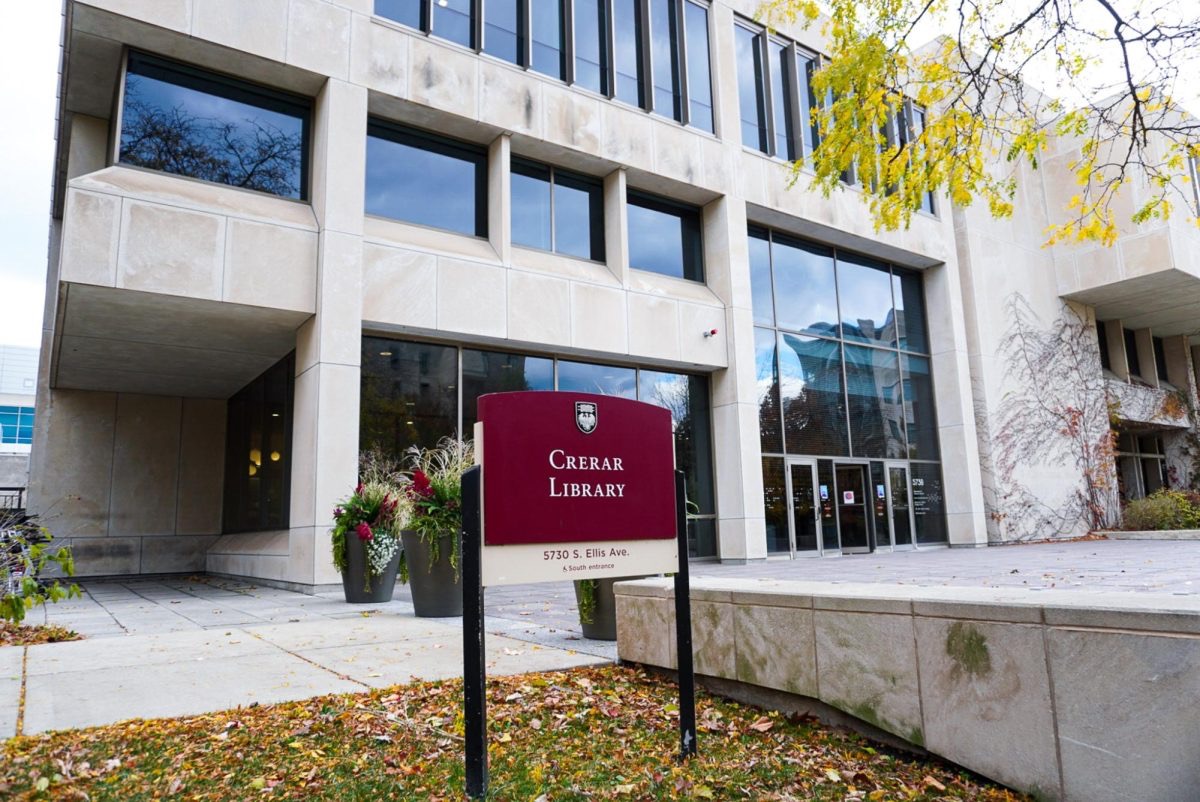
The Department of Computer Science and the Data Science Institute collaborate widely across campus, building an intellectual hub that has driven major institutional advancements. The Media Arts, Data and Design (MADD) Center in Crerar connects designers, humanists, and technologists around creativity and information technology. DSI’s AI+Science research initiative underpins major funded efforts like the Schmidt AI in Science Postdoctoral Fellowship and the NSF–Simons Institute for the Sky. The AI for Climate initiative, with the Institute for Climate and Sustainable Growth, seeks to transform climate science and forecasting. Strong leadership in computational sciences has secured national recognition and major partnerships, including the Institute for Mathematical and Statistical Innovation and the National Institute for Theory and Mathematics in Biology. Joint degree programs with Booth and Harris, cross-listed courses in the Division of Arts and Humanities, and a Ph.D. certificate in the natural sciences have expanded academic pathways, equipping students to contribute broadly to science and society.
How Computing and Data Bring Tangible Benefits to the University
The Compact essay raises an economic argument and uses an unspecified ranking as a proxy for return. Financially, CS and data science (DS) are generating well over $100 million per year in tuition, research awards and gifts—resources exceeding and enabled by the University’s investment in computer and data science following years of underinvestment in those burgeoning areas. However, it is important to look at these returns more broadly, in the context of the University community.
Scholarly Recognition and Momentum
Since 2010 our faculty have received 17 early-career awards, three Sloan Fellowships (see here, here, and here), one PECASE, 11 ACM/IEEE/AAAS Fellowships, and three elected members of the American Academy of Arts and Sciences. These reflect scholarship that anchors campus partnerships, ranging from data-rich archives and cultural projects to policy, law, and health. Our doctoral and postdoctoral alumni are increasingly in demand as faculty at top academic institutions such as MIT, Cornell, Yale, Duke, Dartmouth, Michigan, Purdue and Texas, as well as at leading companies. As for rankings, in the US News Graduate Computer Science ranking UChicago has risen from 35th in 2010 to 27th in 2025, despite fierce competition and massive national investment in academic CS. We have top 20 rankings in the key subfields of theory and systems. Rankings are imperfect, but, alongside student success and research outcomes, they indicate broad momentum.
Undergraduate Education
In the past academic year, the Department of Computer Science had around 4,500 undergraduate course enrollments, an increase of six times compared to 2011. Data science, since its founding in 2019, has grown to around 1,500 undergraduate enrollments. Computer science is the second most popular major on campus, growing from 12 awarded degrees in 2011 to 230 in 2025. Initiated in 2021, data science is already the eighth most popular major and the most popular minor. These programs serve students from all across the University, complementing their exceptional UChicago education with computational thinking and data literacy foundations necessary for success across the humanities, social sciences, and natural sciences.
Master’s Programs
CS and DS run popular master’s programs that together serve over 850 students per year. The resources brought to the University by these programs has increased over 15 times in the past 15 years. These programs involve students from many disciplines, including MSCAPP with Harris and MS/MBA in CS with Booth.
Research Enterprise
External awards rose from around $1 million in 2011 to over $40 million in 2025, totaling approximately $232 million. The indirect cost recovery from these awards contributes to the University’s research budget. Many awards are joint with faculty in other divisions and departments, including law, public policy, psychology, social science, business, arts, biology, and astronomy and astrophysics. These awards underwrite co-taught seminars, labs, and student research opportunities. The work of the CS department and DSI is also supported by over $50 million in gifts from friends of the University over the past 10 years, including two early gifts totaling $20.5 million in 2016.
The University’s investment in computer and data science has paid off twice. First, the balance sheet, growth in student demand, program revenues, grants, gifts and recognitions show a clear institutional return well beyond what was initially invested. Second, and more importantly, the intellectual return: an intellectual community that embraces UChicago’s ideal of rigorous, open inquiry and serves the campus by building bridges between foundations in theory, systems, and AI and applications across domains. We see the humanities, not to mention the sciences and social sciences, as partners. As computing, data, and AI touch all of human inquiry, the interpretive and the computational belong together. That conviction is why we came to UChicago and impacts how we teach and do research today.
These are challenging times for higher education. The right response is not to pit disciplines against one another but to work together to serve our students and the public. We stand ready to deepen that work: advancing knowledge and education with our colleagues across disciplines while inviting them to build the next decade of UChicago computing, data science, and AI with us.